Available Technologies
# of Displayed Technologies: 30 / 207
Applied Category Filter (Click To Remove): Clinical Area
Label-Free Raman Imaging for Early Detection of Disease Remodeling
TS-076401 —
Many progressive diseases, including cardiac, neurological, and other chronic disorders, begin with subtle molecular and cellular changes long before conventional clinical signs become detectable. Current diagnostic approaches generally identify disease only after significant tissue remodeling or …
- College: College of Engineering (COE)
- Inventors: Veeraraghavan, Rengasayee; Ammon, Madison; Radwanski, Przemyslaw; Selimi, Zoja
- Licensing Officer: Ashouripashaki, Mandana
A Combined Negative Pressure Wound Therapy (NPWT) and Fluid Instillation Device for Open Abdomen Applications
TS-076286 —
Literature shows that Negative Pressure Wound Therapy (NPWT) combined with fluid instillation can improve abdominal trauma patient outcomes. Current standards of practice are inefficient, involving assembly and off-label use of at least 8 medical products. This is further complicated by varied pro…
- College: College of Engineering (COE)
- Inventors: Thakkar, Neil; Eichaker, Lauren; Eppers, Daelyn; Juarez, Angelo; Le, Anna; Mathew, Joel; Mihalich, James; Nocera, Tanya; Steere, Camryn
- Licensing Officer: Sharick, Joe
Clinical Stage EAAT2 Activator LH-001 for Treatment of Alzheimer’s Disease, ALS and Epilepsy
TS-075262 — PROBLEM
Alzheimer’s disease is a progressive brain disorder that destroys memory and thinking, affecting 6–7 million people in the U.S. and over 50 million worldwide. There is currently no cure, and available treatments only temporarily manage symptoms or modestly slow disease progressi…
- College: College of Medicine (COM)
- Inventors: Lin, Chien-Liang
- Licensing Officer: Schworer, Adam
Therapeutic use of apohemoglobin-haptoglobin complexes to treat hemolysis and as a drug carrier for targeting CD163+ macrophages and monocytes
TS-075261 — Problem
Hemolysis, the process by which the red blood cell membrane ruptures, releasing hemoglobin (Hb), is typically managed in mammalian organisms by intrinsic proteins such as hemopexin (Hpx) and haptoglobin (Hp). However, their concentrations in plasma are very limited, so, in conditions with s…
- College: College of Engineering (COE)
- Inventors: Susin Pires, Ivan; Cabrales, Pedro; Palmer, Andre
- Licensing Officer: Schworer, Adam
Novel Natural Product Derivatives Treating Chronic Metabolic and Inflammatory Diseases
TS-075260 — Problem
Type 2 diabetes and related metabolic disorders affect hundreds of millions of patients and are frequently accompanied by chronic inflammation, which accelerates disease progression and complications. Existing antidiabetic therapies often fail to adequately address inflammatory pathways and…
- College: College of Pharmacy
- Inventors: Carcache de Blanco, Esperanza; Anaya Eugenio, Gerardo David; Eggers, Nicole
- Licensing Officer: He, Panqing
Endothelial Biomarkers for Detecting Neurological Diseases
TS-075259 — More than a billion people worldwide suffer from some form of neurological disorder, such as Alzheimer's (AD), Parkinson's (PD), multiple sclerosis, traumatic brain injury, epilepsy, stroke, or spinal injury. These conditions result in more than 7 million deaths, with associated costs exceed…
- College: College of Medicine (COM)
- Inventors: Al Tarawneh, Rawan
- Licensing Officer: Willson, Christopher
OSU-ERβ-012: a novel ER-beta agonist for immunomodulation in chronic heart failure
TS-075258 — PROBLEM
Chronic heart failure following myocardial infarction (MI) afflicts ~6.7 million US adults and is driven by maladaptive immune activation, particularly persistent activation and proliferation of CD4+ T cells. Existing anti-inflammatory and immunomodulatory approaches have largely failed to …
- College: College of Medicine (COM)
- Inventors: Bansal, Shyam; Gumina, Richard
- Licensing Officer: He, Panqing
Compositions and Methods for Treating Neurological Disorders
TS-075255 — Problem
The limited regenerative capacity of adult CNS neurons upon transection results in chronic neurological disability. There is an urgent need to develop novel therapies that facilitate CNS axon regeneration and ultimately restore lost neurological functions.
Solution
Applications
Advan…
- College: College of Medicine (COM)
- Inventors: Segal, Benjamin; Sas, Andrew
- Licensing Officer: Bhatti, Hamid
A small-molecule USP30 inhibitor protects against doxorubicin-induced cardiomyopathy
TS-075254 — Problem
Cardiomyopathy weakens the heart muscle and impairs its ability to pump blood effectively, often leading to heart failure or sudden cardiac death. While doxorubicin remains an essential component of many cancer regimens, its use is limited by the risk of causing lethal cardiomyopathy. A maj…
- College: College of Medicine (COM)
- Inventors: Sun, Nuo; Krigman, Judith; Yang, Mingchong; Zhang, Ruohan
- Licensing Officer: Willson, Christopher
Exosomal proteins as novel biomarkers for early detection of ovarian cancer
TS-075248 — Problem
High-grade serous ovarian cancer (HGSOC) accounts for over 75% of all epithelial OC and has a high mortality rate due to a lack of early detection methods. Current biomarkers have low sensitivity and specificity in early-stage disease. There is an urgent need for a more effective diagnosis …
- College: College of Medicine (COM)
- Inventors: Karuppaiyah, Selvendiran; Cohn, David
- Licensing Officer: Taysavang, Panya
OSU-ERβ-012 suppresses the inflammatory response in Systemic Lupus Erythematosus
TS-075247 — PROBLEM
Systemic lupus erythematosus (SLE) is an autoimmune disease characterized by multiple organ damage, affecting women at a 9:1 rate as compared to men. The etiology of SLE is complex and incompletely understood; however, the susceptibility of women during the years in which estrogen levels ar…
- College: College of Medicine (COM)
- Inventors: Jarjour, Wael
- Licensing Officer: He, Panqing
Biomarker for peripheral neuropathy
TS-075246 — Problem
Peripheral neuropathy, especially small fiber neuropathy, is a debilitating condition that affects millions and is commonly linked to aging, diabetes, and metabolic disorders. Existing diagnostic tools are often invasive, expensive, or they lack the sensitivity to detect early disease stage…
- College: College of Medicine (COM)
- Inventors: Townsend, Kristy; Blaszkiewicz, Magdalena; Gunsch, Gilian; Segal, Benjamin; Willows, Jake
- Licensing Officer: Willson, Christopher
PROTAC-based CDK9 Degraders for Cancer Therapy
TS-075245 — Problem
Although cyclin dependent kinase 9 (CDK9) is a promising drug target, traditional small-molecule inhibitors face challenges due to CDK9's structural similarities with other kinases, leading to off-target effects and limited efficacy
Solution
Applications
Advantages
Seeking opp…
- College: College of Pharmacy
- Inventors: Fuchs, James; Ayinde, Oluwatosin
- Licensing Officer: He, Panqing
Identification of DNA methylation profiles for targeted therapy in Acute Myeloid Leukemia and other cancers
TS-075244 — Problem
Acute myeloid leukemia (AML), the most common acute leukemia in adults, is a clinically and molecularly heterogeneous disease. Sequencing of large patient cohorts has uncovered a complex mutational landscape in AML but still fails to completely explain the biological and clinical heterogene…
- College: College of Medicine (COM)
- Inventors: Oakes, Christopher; Blachly, James; Byrd, John
- Licensing Officer: Schworer, Adam
Immune Based Neuroprotective and Neuroregenerative Therapies
TS-075243 — Problem
Central nervous system (CNS) injury can result in permanent neurological disability and vision loss. There is a dire need to develop novel therapies that overcome barriers to repair within the CNS and promote neuron survival and axon regeneration.
Solution
Applicat…
- College: College of Medicine (COM)
- Inventors: Segal, Benjamin; Jerome, Andrew; Liu, Tom; Sas, Andrew
- Licensing Officer: Bhatti, Hamid
Anti-GARP monoclonal antibody enhances anti-cancer therapeutics
TS-075242 — THE PROBLEM
Although immune checkpoint blockade (ICB) has emerged as promising cancer immunotherapy, many tumors fail to respond to ICB. This failed response is often driven by the activation of TGF-β1 in the tumor microenvironment (TME), which induces regulatory T cells and inhibits the funct…
- College: College of Medicine (COM)
- Inventors: Li, Zihai
- Licensing Officer: He, Panqing
CPT1a gene therapy for treating and preventing cardiovascular diseases
TS-075241 — Problem
Cardiovascular diseases (CVDs) such as heart failure, myocardial infarction, and cardiomyopathies remain leading causes of death worldwide. Notably, heart failure is the only major cardiovascular condition still increasing in prevalence. Current treatments primarily consist in managing the …
- College: College of Medicine (COM)
- Inventors: Lewandowski, E. Douglas; Carley, Andrew
- Licensing Officer: Willson, Christopher
A novel class of small, drug-like compounds for the treatment of human liposarcoma
TS-075240 — Problem
Dedifferentiated liposarcomas (DDLPS) are aggressive soft tissue sarcomas with limited effective treatment options and a dismal prognosis. Current therapies often fail due to tumor resistance, poor specificity, and toxicity. The aggressive clinical behavior of LPS and its resistance to chem…
- College: College of Medicine (COM)
- Inventors: Beane, Joal; Goryunova, Marina; Hadad, Christopher; He, Yiran; Zhu, Hua
- Licensing Officer: Willson, Christopher
Unleashing the Power of Radiotherapy – Enhancing Tumor Oxygenation with Next-Gen Radiosensitizers
TS-075239 — Papaverine is an FDA-approved potent inhibitor of mitochondrial complex I. Papaverine’s mitochondrial complex I inhibition has been shown to be responsible for increased oxygenation and enhanced radiation response. However, papaverine is also a phosphodiesterase 10A (PDE10A) inhibitor with pot…
- College: College of Medicine (COM)
- Inventors: Denko, Nicholas; Benej, Martin; Haines, Ben; Mitton-Fry, Mark
- Licensing Officer: Willson, Christopher
Synthetic Whole Blood Substitutes
TS-075238 — Problem
Low titer group O whole blood (LTOWB) is the gold standard used by the US military to treat blood loss. However, there is a limited supply with ex vivo storage and shelf-life limitations. There is no whole blood substitute on the market when LTOWB is not available.
Solution
Dr. Andre Palmer and team have developed several whole blood substitute formulations to mimic the 3 main functions of whole blood: 1) oxygen transport (provided by hemoglobin-based oxygen carrier [HBOC]); 2) clotting (provided by tranexamic acid); and 3) volume replacement (provided by a plasma substitute).
The HBOC consists of T-state polymerized human hemoglobin (PolyhHb).
The clotting agent consists of tranexamic acid (TXA).
The volume replacement solution consists of polymerized human serum albumin (PolyHSA).
Additional additives include high molecular weight polyethylene glycol as a drag reducing agent, and dexamethasone as an anti-inflammatory agent.
Applications
Prehospital and austere environments
Used by EMS and military for early resuscitation before hospital arrival
Hospital trauma protocols
Used for first-line transfusion in exsanguinating patients
Advantages
Mimics the three major functions of whole blood without the risk of blood type incompatibility and disease transmission
Extended shelf life versus whole blood
Scalable production
Seeking opportunities for out-licensing and collaboration
- College: College of Engineering (COE)
- Inventors: Palmer, Andre
- Licensing Officer: Schworer, Adam
Biomarker for prediction of immunotherapy outcomes and precision treatment strategies
TS-075237 — Problem
The loss or mutation of serine/threonine kinase 11 (STK11), observed in 20–25% of non-small cell lung cancer (NSCLC) cases, is associated with poor prognosis and resistance to immune checkpoint blockade (ICB). While STK11 alterations are commonly linked to immunotherapy resistance, so…
- College: College of Medicine (COM)
- Inventors: Kaufman, Jacob
- Licensing Officer: Willson, Christopher
Transducin β-like protein 1 X-Linked Selective Degraders as Anti-cancer Therapeutics
TS-075233 — Problem
Transducin β-like protein 1 (TBL1) has emerged as a promising therapeutic target in oncology, due to its central role in regulating multiple oncogenic signaling pathways. The challenge is how to develop a selective and effective inhibitor of TBL1 with high efficacy and limited side-eff…
- College: College of Pharmacy
- Inventors: Cheng, Xiaolin; Alinari, Lapo; Li, Pui-Kai "Tom"; Yang, Rui
- Licensing Officer: Willson, Christopher
Small molecule inhibitor of the Ral small G proteins for triple-negative breast cancer (TNBC)
TS-075232 — Problem
Breast cancer (BC) is the most commonly diagnosed malignancy and the second leading cause of cancer-related death among women in the United States. Within its subtypes, triple-negative breast cancer (TNBC) carries the highest mortality, driven in large part by a lack of effective targeted t…
- College: College of Medicine (COM)
- Inventors: Sizemore, Steven; Lindert, Steffen
- Licensing Officer: Bhatti, Hamid
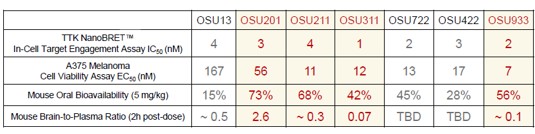 Mps1/TTK Inhibitors for Cancer Therapy
TS-075231 — Problem
Despite recent progress in cancer therapy, acquired resistance to existing cancer drugs reduces therapeutic efficacy. There is a strong need for a therapy with a novel mode of action to overcome drug resistance, and to improve therapeutic efficacy whether used alone or in combination therap…
- College: Office of Health Sciences
- Inventors: Hilinski, Gerard; Alverez, Celeste; Wilson, Tyler
- Licensing Officer: Schworer, Adam
Next-gen AAV-delivered anti-GARP/CD3 BiTCE for treatment of hematological and solid tumors
TS-075191 — PROBLEM
Cancer immunotherapies (e.g. ICB, CAR-T cells, and conventional bispecific T cell engagers) have transformed treatment of hematological and solid malignancies; however, their impact is limited by several factors including insufficient durability of therapeutic activity, tumor heterogeneity,…
- College: College of Medicine (COM)
- Inventors: Li, Zihai
- Licensing Officer: He, Panqing
Bidirectional modulation of liver sinusoidal clearance system
TS-075188 — Problem
The liver sinusoidal clearance system (LSCS) is responsible for eliminating the majority of circulating macromolecular waste, inflammatory mediators, toxins, and therapeutic agents. Excessive hepatic clearance limits the efficacy of therapies, including chemotherapies and vaccines. In contr…
- College: College of Education and Human Ecology
- Inventors: Ziouzenkova, Ouliana; Parquette, Jonathan
- Licensing Officer: Bhatti, Hamid
A novel approach to reverse T cell exhaustion to improve anti-cancer and anti-viral responses
TS-075186 — PROBLEM
Exhausted CD8 T cells significantly limit the effectiveness of immunotherapies and cell therapies in cancer and chronic viral infections. Persistent antigen exposure drives durable epigenetic reprogramming that locks T cells into a dysfunctional state, silencing effector and memory-associat…
- College: College of Medicine (COM)
- Inventors: Ghoneim, Hazem
- Licensing Officer: He, Panqing
Lipolysis-stimulated lipoprotein receptor (LSR)-targeted mAb and ADC for LSR+ tumors treatment
TS-075185 — Problem
The lipolysis-stimulated lipoprotein receptor (LSR) is a promising target for cancer therapy. LSR is overexpressed in many tumor tissues with metastatic signatures such as breast, gastric, and endometrial cancer. LSR expression levels may serve as prognostic indicators and help stratify pat…
- College: College of Engineering (COE)
- Inventors: Liu, X. Margaret; Zhou, Zhuoxin; Zhou, Lufang
- Licensing Officer: Schworer, Adam
TL-iGeneCombo: Transfer Learning for Individual Sample Specific Gene Combination Effect Prediction and Selection in Cancer Cells
TS-075184 — Problem
Synthetic lethality (SL) is defined as a gene combination effect (GCE) of two genes where loss-of-function of both genes, rather than one, causes cell death. While carrying strong therapeutic potential in the treatment of cancer, SL interactions are context specific and sparse, thereby limi…
- College: College of Medicine (COM)
- Inventors: Li, Lang; Gökbağ, Birkan
- Licensing Officer: Hampton, Andrew
A novel machine learning model for prediction of ICI responsive patients based on ICI pharmacokinetics
TS-075183 — Problem
Current eligibility biomarkers for Immune checkpoint inhibitors (ICIs) poorly predict patient’s response. Drug clearance, both at baseline and over time, is a stronger predictor of ICI effectiveness, however the current non-linear mixed effects modeling (NLME) approach for estimating …
- College: College of Pharmacy
- Inventors: Phelps, Mitchell "Mitch"; Adeluola, Adeoluwa; Coss, Christopher; Kim, Kyeongmin; Mo, Xiaokui "Molly"; Owen, Dwight
- Licensing Officer: Hampton, Andrew