Available Technologies
# of Displayed Technologies: 10 / 14
Applied Category Filter (Click To Remove): Therapeutics
Clinical Stage EAAT2 Activator LH-001 for Treatment of Alzheimer’s Disease, ALS and Epilepsy
TS-075262 — PROBLEM
Alzheimer’s disease is a progressive brain disorder that destroys memory and thinking, affecting 6–7 million people in the U.S. and over 50 million worldwide. There is currently no cure, and available treatments only temporarily manage symptoms or modestly slow disease progressi…
- College: College of Medicine (COM)
- Inventors: Lin, Chien-Liang
- Licensing Officer: Schworer, Adam
Therapeutic use of apohemoglobin-haptoglobin complexes to treat hemolysis and as a drug carrier for targeting CD163+ macrophages and monocytes
TS-075261 — Problem
Hemolysis, the process by which the red blood cell membrane ruptures, releasing hemoglobin (Hb), is typically managed in mammalian organisms by intrinsic proteins such as hemopexin (Hpx) and haptoglobin (Hp). However, their concentrations in plasma are very limited, so, in conditions with s…
- College: College of Engineering (COE)
- Inventors: Susin Pires, Ivan; Cabrales, Pedro; Palmer, Andre
- Licensing Officer: Schworer, Adam
Synthetic Whole Blood Substitutes
TS-075238 — Problem
Low titer group O whole blood (LTOWB) is the gold standard used by the US military to treat blood loss. However, there is a limited supply with ex vivo storage and shelf-life limitations. There is no whole blood substitute on the market when LTOWB is not available.
Solution
Dr. Andre Palmer and team have developed several whole blood substitute formulations to mimic the 3 main functions of whole blood: 1) oxygen transport (provided by hemoglobin-based oxygen carrier [HBOC]); 2) clotting (provided by tranexamic acid); and 3) volume replacement (provided by a plasma substitute).
The HBOC consists of T-state polymerized human hemoglobin (PolyhHb).
The clotting agent consists of tranexamic acid (TXA).
The volume replacement solution consists of polymerized human serum albumin (PolyHSA).
Additional additives include high molecular weight polyethylene glycol as a drag reducing agent, and dexamethasone as an anti-inflammatory agent.
Applications
Prehospital and austere environments
Used by EMS and military for early resuscitation before hospital arrival
Hospital trauma protocols
Used for first-line transfusion in exsanguinating patients
Advantages
Mimics the three major functions of whole blood without the risk of blood type incompatibility and disease transmission
Extended shelf life versus whole blood
Scalable production
Seeking opportunities for out-licensing and collaboration
- College: College of Engineering (COE)
- Inventors: Palmer, Andre
- Licensing Officer: Schworer, Adam
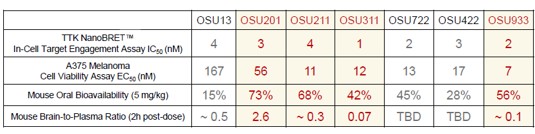 Mps1/TTK Inhibitors for Cancer Therapy
TS-075231 — Problem
Despite recent progress in cancer therapy, acquired resistance to existing cancer drugs reduces therapeutic efficacy. There is a strong need for a therapy with a novel mode of action to overcome drug resistance, and to improve therapeutic efficacy whether used alone or in combination therap…
- College: Office of Health Sciences
- Inventors: Hilinski, Gerard; Alverez, Celeste; Wilson, Tyler
- Licensing Officer: Schworer, Adam
Lipolysis-stimulated lipoprotein receptor (LSR)-targeted mAb and ADC for LSR+ tumors treatment
TS-075185 — Problem
The lipolysis-stimulated lipoprotein receptor (LSR) is a promising target for cancer therapy. LSR is overexpressed in many tumor tissues with metastatic signatures such as breast, gastric, and endometrial cancer. LSR expression levels may serve as prognostic indicators and help stratify pat…
- College: College of Engineering (COE)
- Inventors: Liu, X. Margaret; Zhou, Zhuoxin; Zhou, Lufang
- Licensing Officer: Schworer, Adam
Cancer mitochondria-targeted luminoptogenetics (mLumiOpto) to treat GBM and metastatic cancers
TS-075179 — Problem
Mitochondria is a promising target for cancer treatment. However, current strategies to specifically and effectively destroy cancer mitochondria in vivo are limited.
Solution
Applications
Competitive Advantages
Seeking Opportunities for Licensing and collaboration
- College: College of Engineering (COE)
- Inventors: Liu, Xiaoguang "Margaret"; Zhou, Lufang
- Licensing Officer: Schworer, Adam
Humanized somatostatin receptor 2 (SSTR2) mAb and ADCs to target SSTR2+ tumors
TS-075165 — Problem
Neuroendocrine tumors (NETs) are often metastatic at diagnosis, thus limiting surgical options. Chemotherapies offer limited efficacy and high toxicity. Meningiomas, though usually benign, are the most common intracranial tumors. Both NETs and meningiomas overexpress SSTR2, making it a prom…
- College: College of Engineering (COE)
- Inventors: Liu, Xiaoguang "Margaret"; Zhou, Lufang
- Licensing Officer: Schworer, Adam
Humanized SSTR2 mAb and ADC to target SSTR2+ tumors
TS-066912 — Targeted humanized mAbs and ADCs for cancer treatment
The Liu Lab
Dr. Xiaoguang “Margaret” Liu applies her industry experience (Lonza, Merck, and Life Technologies) in cell line and process development towards her lab’s focus on targeted anti-cancer therapies including monoclonal antibodies, antibody-drug conjugates, and gene therapi…
- College: College of Engineering (COE)
- Inventors: Liu, Xiaoguang "Margaret"; Zhou, Lufang
- Licensing Officer: Schworer, Adam
 Dual Androgen Receptor/AKR1C3 Inhibitors for Prostate Cancer
TS-062605 — The Need:
Castration-resistant prostate cancer (CRPC) poses a significant challenge in oncology, with existing therapies often leading to resistance and disease progression. Key drivers of resistance include the androgen receptor (AR) and aldo-keto reductase family 1 member C3 (AKR1C3). Novel treat…
- College: College of Pharmacy
- Inventors: Li, Pui-Kai "Tom"; Cheng, Xiaolin; Kong, Xiaotian; Xing, Sam
- Licensing Officer: Schworer, Adam
Purification of apoproteins and general methods for protein purification
TS-062540 — General methods for purifying proteins that can be used in various applications such as targeted drug delivery, bioimaging, and hemolysis treatment.
The Need
Novel protein and apoprotein purification strategies are valuable tools with a wide variety of medical and research applications. While there are existing techniques for protein and apoprotein purification, some of these have flaws such as the use of harsh denaturants, highly flammable sol…
- College: College of Engineering (COE)
- Inventors: Susin Pires, Ivan; Cabrales, Pedro; Palmer, Andre
- Licensing Officer: Schworer, Adam