
Available Technologies
# of Displayed Technologies: 10 / 793
Ultra‑Fast 3D Real‑Time Cardiac MRI Without Gating or Binning
TS-074669 —
Current cardiac MRI workflows rely heavily on breath-holds, ECG gating, and retrospective binning, which break down in patients with arrhythmias, irregular breathing, or limited ability to cooperate. Existing 3D approaches often average away beat-to-beat variability or suffer from motion artifacts…
- College: College of Engineering (COE)
- Inventors: Ahmad, Rizwan; Arshad, Syed Murtaza; Chen, Chong; Sultan, Muhammad Ahmad
- Licensing Officer: Randhawa, Davinder
Converting Industrial Silicate Waste into High‑Value Cement Additives
TS-074623 —
The construction industry faces growing pressure to reduce the carbon footprint of cement while maintaining performance, durability, and reliable supply chains. Traditional supplementary cementitious materials (SCMs) such as fly ash and blast furnace slag are increasingly scarce or regionally cons…
- College: College of Engineering (COE)
- Inventors: Zhai, Shang; Qin, Jiangzhou; Shank, Kyle
- Licensing Officer: Ashouripashaki, Mandana
Modular Generative AI Framework for Efficient Molecular Discovery
TS-074599 —
Discovering molecules that simultaneously satisfy multiple competing design criteria is a resource-intensive challenge across the pharmaceutical, energy, and materials industries. The enormity of chemical space makes exhaustive screening impractical, while existing AI-guided methods either restric…
- College: College of Engineering (COE)
- Inventors: Paulson, Joel; Muthyala, Madhav Reddy; Sorourifar, Farshud; Tan, Tianhong
- Licensing Officer: Randhawa, Davinder
Human–AI Interaction Research Platform
TS-074578 —
Opportunity Overview
This technology is a web‑based, multi‑user platform designed to rigorously study how people interact with AI systems in real time. Unlike traditional survey tools or product A/B testing environments, the platform supports live human–AI collaboration while capturing …
- College: College of Arts & Sciences
- Inventors: Meng, Jingbo
- Licensing Officer: Panic, Ana
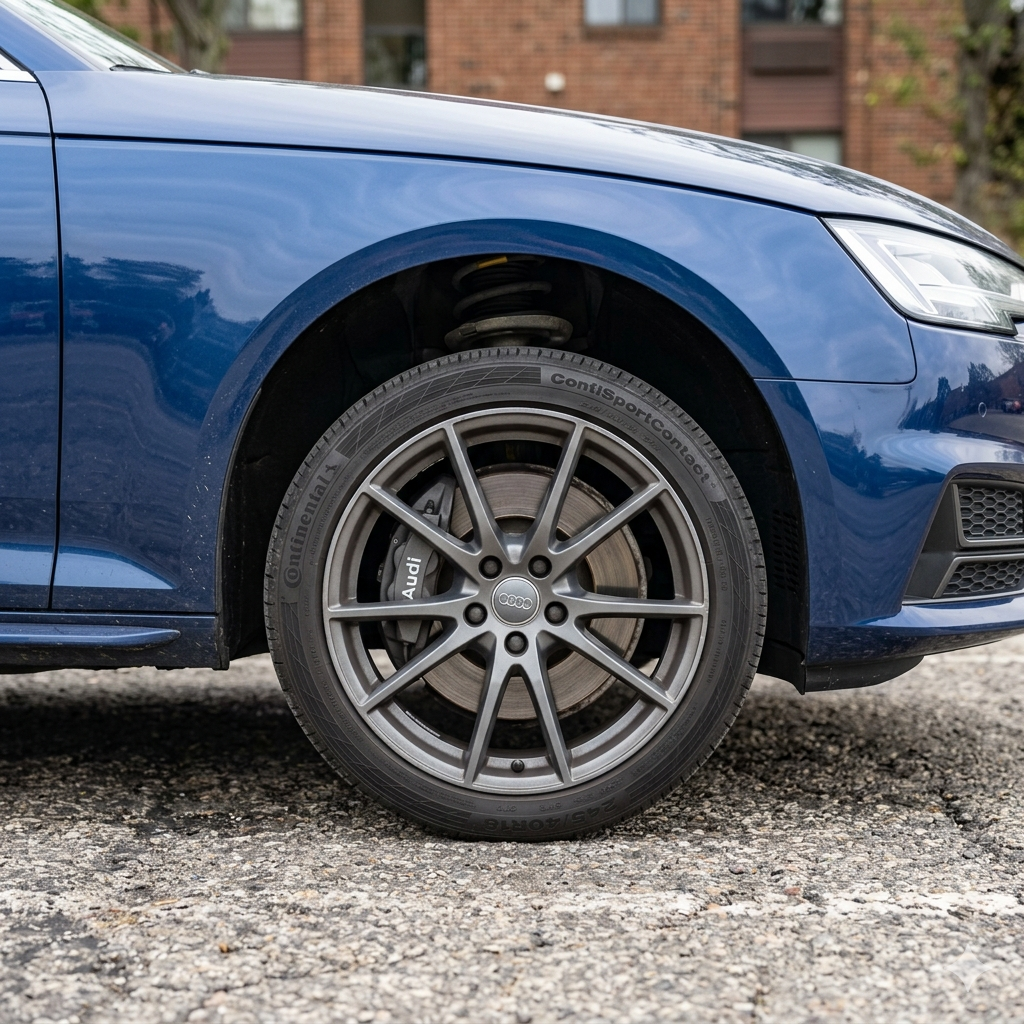 Adaptive Morphing Fender Skirt for Steered Vehicle Wheels
TS-074573 —
Vehicle manufacturers continue to pursue aerodynamic improvements to meet fuel efficiency, emissions, and range targets. Open or partially open wheel wells remain a persistent source of aerodynamic drag, noise, and efficiency loss. Traditional fixed fender skirts improve aerodynamics but cannot ac…
- College: College of Engineering (COE)
- Inventors: Chillara, Venkata Siva Chaithanya; Dapino, Marcelo; Gandhi, Umesh; Headings, Leon
- Licensing Officer: Zinn, Ryan
Scalable Uniform Thin‑Film Deposition from Nanopowders
TS-074525 —
Many advanced electronic, sensing, and optical devices rely on high‑quality thin films, yet manufacturing uniform, defect‑free films over large areas remains challenging. Conventional solution‑based approaches often result in rough, cracked, or non‑uniform coatings, while vacuum‑based de…
- College: College of Engineering (COE)
- Inventors: Rahaman, Mohammad Mahafuzur; Gouma, Pelagia "Perena"
- Licensing Officer: Randhawa, Davinder
Near‑Net‑Shape Manufacturing of Lightweight Steel Pistons
TS-074512 —
Modern diesel and high‑performance internal combustion engines demand pistons that withstand extreme thermal and mechanical loads while becoming lighter, more fuel‑efficient, and lower cost to manufacture. Steel pistons offer durability advantages over aluminum but are traditionally heavy and …
- College: College of Engineering (COE)
- Inventors: Shivpuri, Rajiv
- Licensing Officer: Randhawa, Davinder
Silicon‑Compatible High‑Sensitivity Infrared Avalanche Photodetectors
TS-074467 —
Many emerging applications in communications, sensing, and imaging require detectors that can operate with high sensitivity at infrared wavelengths where silicon alone performs poorly. Existing infrared detector technologies often involve trade‑offs between sensitivity, noise, manufacturability,…
- College: College of Engineering (COE)
- Inventors: Krishna, Sanjay
- Licensing Officer: Randhawa, Davinder
Aliovalent‑Doped Iron Oxide Oxygen Carriers for Chemical Looping
TS-074441 —
Chemical looping gasification and combustion are promising pathways for low‑carbon energy conversion, CO₂ capture, and syngas production, but their commercial deployment is constrained by the performance of available oxygen carrier materials. Existing metal oxide oxygen carriers often suffer f…
- College: College of Engineering (COE)
- Inventors: Fan, Liang-Shih; Cheng, Zhuo; Chung, Cheng; Guo, Mengqing "MENGQING"; Qin, Lang
- Licensing Officer: Ashouripashaki, Mandana
High-Resolution Melting System for Complex Ice Core Analysis
TS-074433 —
Researchers and organizations studying polar and marine environments increasingly rely on ice cores to understand climate processes, contaminant transport, and biogeochemical change. However, existing ice core processing tools are largely optimized for relatively clean, homogeneous samples and str…
- College: College of Arts & Sciences
- Inventors: dos Reis, Rafael; Diaz, Melisa; Magner, Nolan
- Licensing Officer: Ashouripashaki, Mandana