Available Technologies
# of Displayed Technologies: 9 / 9
Applied Category Filter (Click To Remove): Hematology, Blood & Lymphatic
Therapeutic use of apohemoglobin-haptoglobin complexes to treat hemolysis and as a drug carrier for targeting CD163+ macrophages and monocytes
TS-075261 — Problem
Hemolysis, the process by which the red blood cell membrane ruptures, releasing hemoglobin (Hb), is typically managed in mammalian organisms by intrinsic proteins such as hemopexin (Hpx) and haptoglobin (Hp). However, their concentrations in plasma are very limited, so, in conditions with s…
- College: College of Engineering (COE)
- Inventors: Susin Pires, Ivan; Cabrales, Pedro; Palmer, Andre
- Licensing Officer: Schworer, Adam
Synthetic Whole Blood Substitutes
TS-075238 — Problem
Low titer group O whole blood (LTOWB) is the gold standard used by the US military to treat blood loss. However, there is a limited supply with ex vivo storage and shelf-life limitations. There is no whole blood substitute on the market when LTOWB is not available.
Solution
Dr. Andre Palmer and team have developed several whole blood substitute formulations to mimic the 3 main functions of whole blood: 1) oxygen transport (provided by hemoglobin-based oxygen carrier [HBOC]); 2) clotting (provided by tranexamic acid); and 3) volume replacement (provided by a plasma substitute).
The HBOC consists of T-state polymerized human hemoglobin (PolyhHb).
The clotting agent consists of tranexamic acid (TXA).
The volume replacement solution consists of polymerized human serum albumin (PolyHSA).
Additional additives include high molecular weight polyethylene glycol as a drag reducing agent, and dexamethasone as an anti-inflammatory agent.
Applications
Prehospital and austere environments
Used by EMS and military for early resuscitation before hospital arrival
Hospital trauma protocols
Used for first-line transfusion in exsanguinating patients
Advantages
Mimics the three major functions of whole blood without the risk of blood type incompatibility and disease transmission
Extended shelf life versus whole blood
Scalable production
Seeking opportunities for out-licensing and collaboration
- College: College of Engineering (COE)
- Inventors: Palmer, Andre
- Licensing Officer: Schworer, Adam
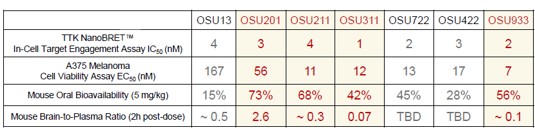 Mps1/TTK Inhibitors for Cancer Therapy
TS-075231 — Problem
Despite recent progress in cancer therapy, acquired resistance to existing cancer drugs reduces therapeutic efficacy. There is a strong need for a therapy with a novel mode of action to overcome drug resistance, and to improve therapeutic efficacy whether used alone or in combination therap…
- College: Office of Health Sciences
- Inventors: Hilinski, Gerard; Alverez, Celeste; Wilson, Tyler
- Licensing Officer: Schworer, Adam
Purification of apoproteins and general methods for protein purification
TS-062540 — General methods for purifying proteins that can be used in various applications such as targeted drug delivery, bioimaging, and hemolysis treatment.
The Need
Novel protein and apoprotein purification strategies are valuable tools with a wide variety of medical and research applications. While there are existing techniques for protein and apoprotein purification, some of these have flaws such as the use of harsh denaturants, highly flammable sol…
- College: College of Engineering (COE)
- Inventors: Susin Pires, Ivan; Cabrales, Pedro; Palmer, Andre
- Licensing Officer: Schworer, Adam
 Automatic Implanted Port Access Device
TS-061547 — A venous access port device that leverages near-field communication (NFC) to automate needle placement as well as a disposable needle cartridge to increase the ease of and help maintain aseptic access to the port.
Venous access ports are central venous access devices that allow healthcare practitioners easy access to the patient’s veins to give treatment and take blood. Typically, these ports are made of non-irritant material and can remain under the skin for weeks or months.
The Need
Accessing a …
- College: College of Engineering (COE)
- Inventors: Garcia, Jodi; Johnson, Trey; Purdom, Kellie; Weiss, Solomon; Weiss, Simon; Yuhasz, Ben
- Licensing Officer: Bhatti, Hamid
Reduction in Incidence and Severity of Acute Graft-Versus-Host Disease (aGVHD) via CRISPR-Cas9 Deletion of the miR-155 Host Gene (MIR155HG) in Primary Human T Cells
TS-057739 —
CRISPR/Cas 9 mediated targeting of MIR155HG in primary human T cells creates genomic deletions that disrupt transcription of mature microRNA-155 (miR-155, a miR associated with inflammation). Applying this treatment to donor T cells prior to allogenic hematopoietic stem cell transplantation (allo-HSCT) when treating hematological malignancies and other primary bone marrow disorders can prevent the development of aGVHD in patients.
The Need
More than 8,000 patients receive allo-HSCT annually in the US alone as a cure for hematologic malignancies and other primary bone marrow disorders. However, the major barrier for the success of allo-HSCT is the high incidence of aGVHD and its associated morbidity and mortality. Acute GVHD…
- College: College of Medicine (COM)
- Inventors: Ranganathan, Parvathi; Garzon, Ramiro
- Licensing Officer: He, Panqing
Therapeutic uses of the scavenging protein cocktail to treat plasma protein imbalances or depletion
TS-053103 — Uncontrolled hemolysis (i.e., destruction of red blood cells) is characterized by the increase of circulating toxic cell-free hemoglobin, heme and iron in the bloodstream. In vivo, the body’s natural supply of plasma scavenger proteins acts to neutralize these toxic species. However, these scavenger proteins such as haptoglobin, hemopexin and transferrin, which detoxify hemoglobin, heme and iron, respectively, are depleted in various clinical conditions such as hemorrhagic shock, burns, surgery, organ transplantation, sepsis and trauma.
Dr. Andre Palmer’s lab at The Ohio State University has developed a novel therapeutic protein mixture, which can be used to treat plasma protein imbalances or depletion caused by the adverse events described above. The properties of this protein mixture are beneficial as they lend themselves to an inexpensive manufacturing process and potential improvements in clinical outcomes.
Fluid replacement as part of resuscitation efforts in clinical care is a cornerstone of treatment especially in cases with severe trauma. The regular usage of these fluids in hospitals requires the mixture to be easily transported, easily stored and applicable across a wide variety of patients. To…
- College: College of Engineering (COE)
- Inventors: Susin Pires, Ivan; Palmer, Andre
- Licensing Officer: Schworer, Adam
 Targeting circular PCMTD1 in leukemias with p53 mutations
TS-049827 — circPCMTD1 is a novel target in p53 mutated leukemias.
Despite recent progress in understanding acute myeloid leukemia (AML) biology and the use of intensive treatments, the long-term overall survival of non-pediatric AML patients is only 30-40% in young patients (<60 years) and less than 10% in elderly AML patients (>60 years). This highlights …
- College: College of Medicine (COM)
- Inventors: Garzon, Ramiro; Papaioannou, Dimitrios
- Licensing Officer: He, Panqing
miR-3151 and BAALC as a Target for Drug Therapy
TS-014895 — Identified gene target for treatment of human acute leukemia, brain tumors and melanoma
Treatment failure is one of the leading causes of death in patients with human acute leukemia, yet the cause of treatment failure is still largely unknown. Overexpression of the RNA gene miR-3151 and its host gene, Brain and Acute Leukemia, Cytplasmic (BAALC), is a sign of an ineffective treatment…
- College: College of Medicine (COM)
- Inventors: de la Chapelle, Albert; Eisfeld, Ann-Kathrin; Tanner, Stephan
- Licensing Officer: Schworer, Adam